
Preamble
I found there’d been some water ingress into the AVM hubs I fitted in 2022 and were no longer working. Disappointing. With the exception of driving in Iceland, it’s not as if they got wet all that often.
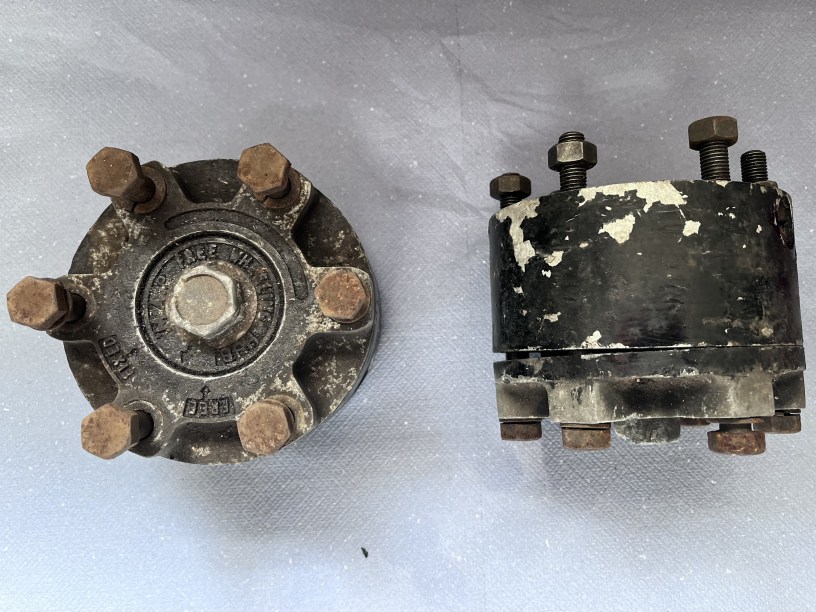
A friend has a set of MAP freewheeling hubs on his 6 cylinder and seems pleased enough with them. They’re pretty robust, look the part, and more importantly were offered by Land Rover as an optional extra.
After some searching, I found a pair for-sale in the UK on eBay and bought them.
Mayflower Automotive Products Ltd (MAP)
As covered previously, when the (older) Land Rover is in 2WD, the transmission elements in the front axle are still being rotated by the front wheels whilst the vehicle is driven by the rear axle. In effect the front axle is, “land driven”. There’s quite a lot of mechanical loss of power from turning all these parts.
A freewheeling hub disengages the drive from the axle hub to allow the wheel to rotate freely on its bearing and not “drive” the half shafts, differential, prop shaft etc.
There is an excellent website maintained by Land Rover Optional Equipment (LROE) in the UK who provide an in-depth history of the development of the MAP hubs. I’m not going to plagiarise their research so please visit their page for the details.
eBay Purchase
Unless you’re very lucky, have very deep pockets and tremendous patients, new old stock or restored MAP hubs are few and far between.
Used hubs pop up on eBay from time to time and I happened to catch a used pair. These are identified as being early in the production run (of 12 years) with the presence of an oil filler hole, similar to the original early hub bodies.

Dismantling
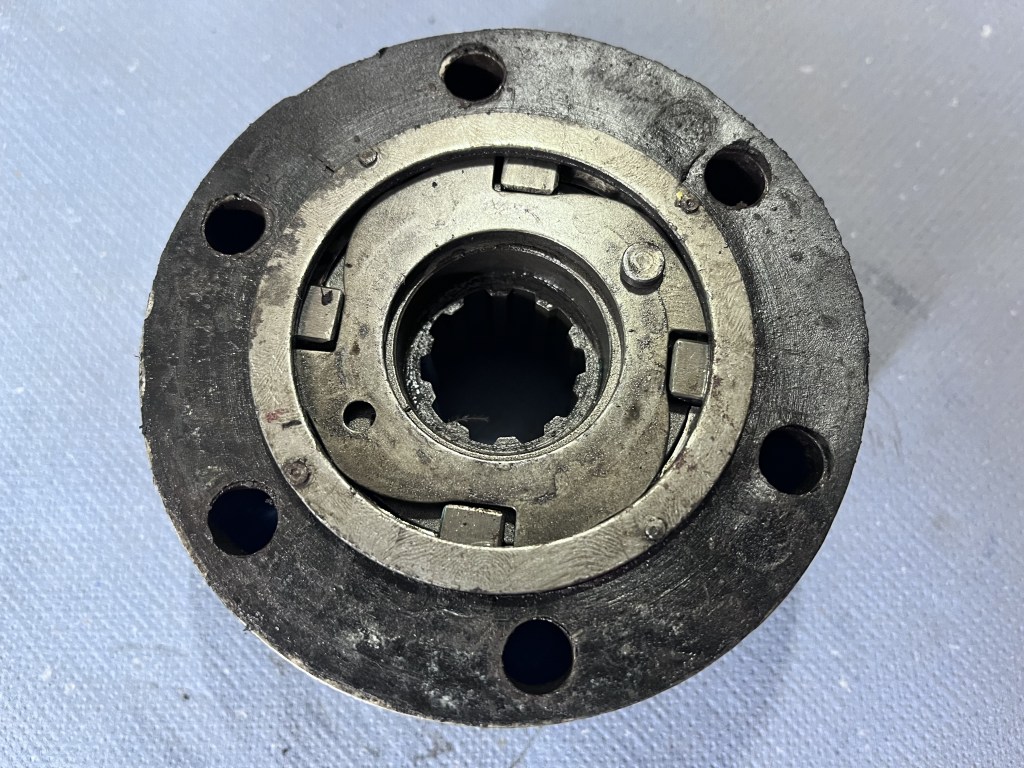
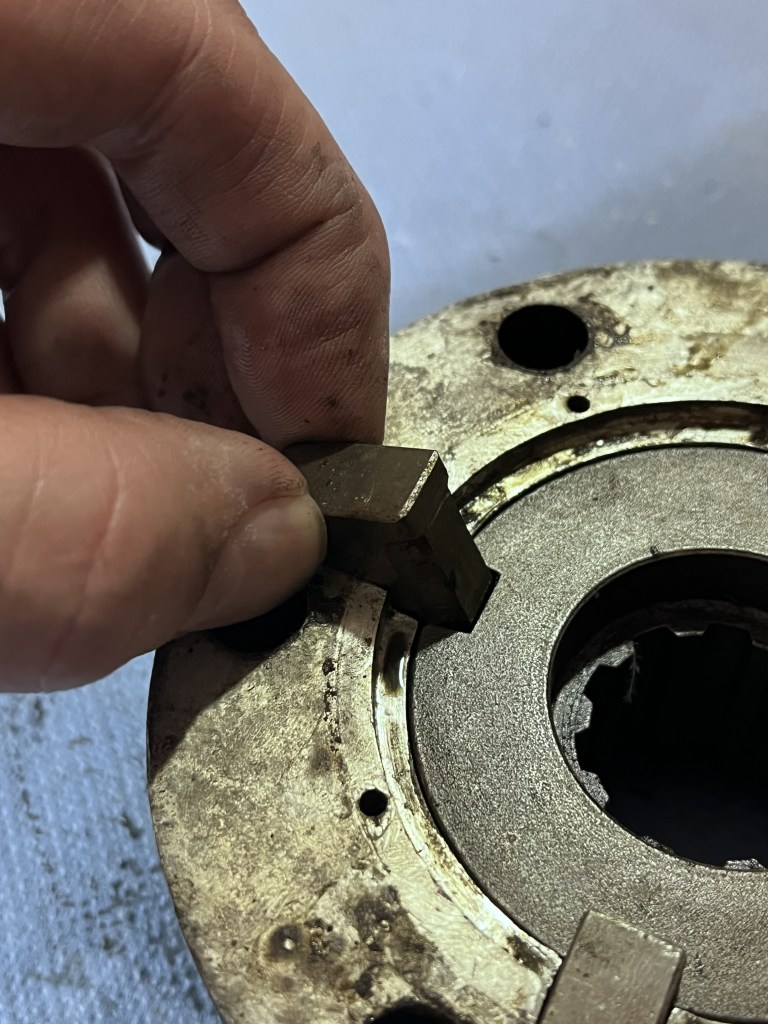
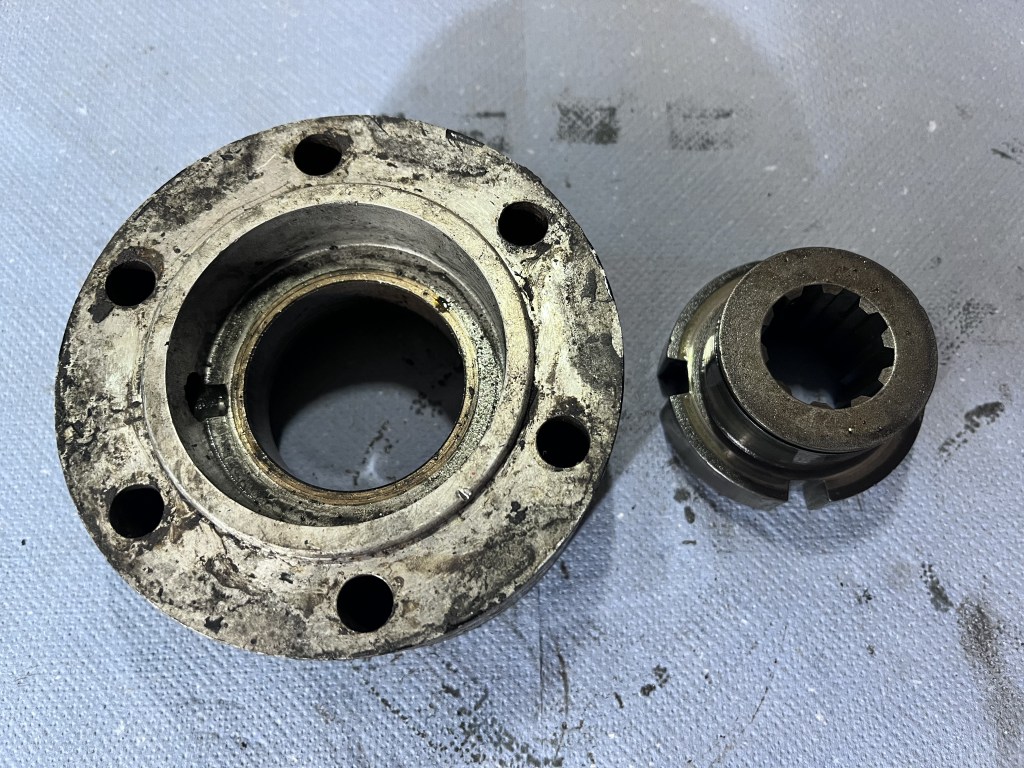
With the exception of a large circlip, there’s really no difficulty in stripping down these hubs, so here goes:







would you mind sharing the WordPress theme you are using for your blog. I like it quite a lot, but have not been able to find it in the list of themes. Thanks so much. I really enjoy your restoration efforts and your post.
Lin
LikeLike
Hi Lin, thanks for the question. The theme on site is, “Rowling” which I have customised. I’ve had a quick look on the Jetpack app to see if I can share the customised theme but nothing shouts out how this might work. I’ll contact customer support and see what they say.
LikeLike
Thanks so much! I am currently restoring my son’s Frogeye Sprite. I have been providing updates on my Valvechatter.com site, but I would like to create a new site for his car. The car recently came home from the paint shop. It is Cotswold blue so I would use various shades of blue. Really appreciate that you are willing to look into it!
LikeLike
Sorry for the delay, busy times at work. I checked with the support bot, (very helpful) and it informed me as follows: “Export and Import Theme Settings: Some themes allow you to export your settings and then import them into another site. Check your theme’s documentation to see if this feature is available”… I don’t see if “Rowling” is one of those profiles, so I need to check on my PC… but right now it’s too sunny to be looking at a computer :-)… we’re off for a swim in the lake.
LikeLike
I can identify with that!
Lin
LikeLike
I first posted this in the wrong place… It seems I can download my profile but it’s not very clean. Many folders and many many files. I went have no clue what to send you. If you are editing the site on a PC / MAC, it’s pretty straight forwards. There’s not may options. I am using Theme, “ROWLING”. Sorry, I am not able to provide a solution as simple as just a file. Cheers. Andy.
LikeLike